When Hurricane Katrina devastated the Gulf Coast in 2005, traditional communication infrastructure collapsed within hours. Cell towers toppled, phone lines went dead, and first responders found themselves unable to coordinate rescue efforts. In this communication void, volunteer radio operators became lifelines, relaying critical information between hospitals, emergency shelters, and rescue teams. This scenario repeats itself during nearly every major disaster, highlighting why organizations like REACT International remain essential components of modern emergency response systems.
Understanding REACT International’s Mission
REACT International stands as a 501(c)(3) nonprofit organization that has quietly served communities since 1962, organizing skilled volunteer radio operators into teams that provide crucial communications support during emergencies and disasters. Unlike casual radio hobbyists, REACT members undergo structured training and maintain operational readiness to deploy when traditional communication systems fail or become overwhelmed.
The organization positions itself strategically within the emergency management ecosystem, focusing specifically on interoperable communications—the ability for different agencies, jurisdictions, and organizations to communicate seamlessly during incidents. This specialization addresses one of the most persistent challenges in disaster response: the communication breakdown that occurs when multiple agencies with incompatible radio systems attempt to coordinate their efforts.
REACT teams don’t replace professional emergency communications; they augment existing resources when surge capacity is needed. During large-scale incidents, even well-equipped public safety agencies can find their communication resources stretched thin. REACT volunteers provide additional trained operators who can handle routine traffic, freeing professional dispatchers and communicators to focus on critical life-safety operations.
From CB Radio Monitors to Modern Emergency Communicators
The organization’s roots trace back to 1962, emerging during the Citizens Band (CB) radio boom when volunteers began monitoring emergency channel 9 to assist stranded motorists and relay emergency calls to authorities. This grassroots movement reflected the community-minded spirit of the era, with ordinary citizens using readily available technology to help their neighbors.
Throughout the 1960s and 1970s, REACT teams became fixtures along American highways, providing directions to lost travelers, arranging tow trucks for breakdowns, and serving as informal emergency dispatchers in areas with limited phone coverage. The iconic phrase “breaker breaker” became synonymous with these volunteer monitors who maintained constant vigils on the airwaves.
The transformation from highway assistance to comprehensive emergency communications began in the 1980s as cellular phones reduced the need for roadside radio assistance. Rather than disbanding, REACT evolved its mission, recognizing that natural disasters and large-scale emergencies still created communication challenges that volunteer radio operators could address. Teams began training for disaster response, learning protocols for emergency net operations, and establishing relationships with local emergency management agencies.
Today’s REACT bears little resemblance to its CB-era predecessor. Modern teams utilize various radio technologies including amateur radio, GMRS (General Mobile Radio Service), and digital modes. Members study contemporary emergency management frameworks, maintain interoperability standards, and integrate seamlessly with professional response organizations. The evolution reflects both technological advancement and the professionalization of volunteer emergency services.
Organizational Structure and Operations
REACT International operates through a formalized governance structure that ensures consistency and professionalism across its network of teams. Multiple committees manage different aspects of the organization, from maintaining technical standards to coordinating training programs. This structured approach differentiates REACT from informal radio clubs, creating an organization capable of delivering reliable emergency communications support.
The Technology Committee establishes hardware and software standards across all REACT teams, ensuring that volunteers in different regions can work together effectively during multi-jurisdictional responses. These standards cover everything from radio programming protocols to database management systems, creating operational consistency that emergency managers can depend upon.
Member services include comprehensive training materials, operational databases, and communication infrastructure that keeps teams connected during both routine operations and emergency activations. The organization maintains both public-facing and member-only web properties, distributing information, coordinating activities, and sharing lessons learned from deployments.
Local REACT teams maintain autonomy while adhering to organizational standards. This balance allows teams to address specific community needs while maintaining the capability to integrate into larger responses. Teams typically establish memorandums of understanding with local emergency management agencies, defining their roles and ensuring proper integration into official response structures.
Training and Standards Alignment
Modern emergency response requires more than radio skills. REACT’s training programs emphasize alignment with the National Incident Management System (NIMS) and Incident Command System (ICS), the standardized frameworks used by all U.S. emergency response agencies. This alignment ensures that REACT volunteers speak the same operational language as professional responders and understand their place within the broader incident management structure.
NIMS training covers essential concepts including unified command structures, resource management protocols, and information flow procedures. Volunteers learn how incidents scale from local to regional responses, understanding how their communications support must adapt to changing operational tempos and command structures. The emphasis on standardized terminology prevents the confusion that historically plagued multi-agency responses.
ICS-specific training focuses on the communications function within the command structure. REACT members understand the Communications Unit Leader position, radio cache management, and the technical specialists who support incident communications. This knowledge allows volunteers to integrate smoothly into communications units, whether supporting a single agency or complex unified commands.
Beyond formal frameworks, REACT training addresses practical skills including emergency net procedures, message handling protocols, and interoperability techniques. Members practice establishing and managing radio networks that can handle high volumes of tactical and administrative traffic while maintaining accuracy and operational security. Regular exercises test these skills, ensuring readiness when activation calls arrive.
Real-World Applications and Deployments
REACT teams contribute to emergency response through various deployment scenarios, each requiring different skills and capabilities. During natural disasters, teams often establish and operate radio networks that connect evacuation shelters, distribution points, and emergency operations centers. These networks handle everything from supply requests to medical transportation coordination, managing the routine communications that keep response operations flowing.
Planned events represent another significant operational area. Marathons, parades, and large public gatherings require extensive communication support to coordinate medical services, crowd control, and logistical operations. REACT teams provide trained operators familiar with event communication protocols, allowing public safety agencies to maintain their normal patrol and response capabilities while the event proceeds.
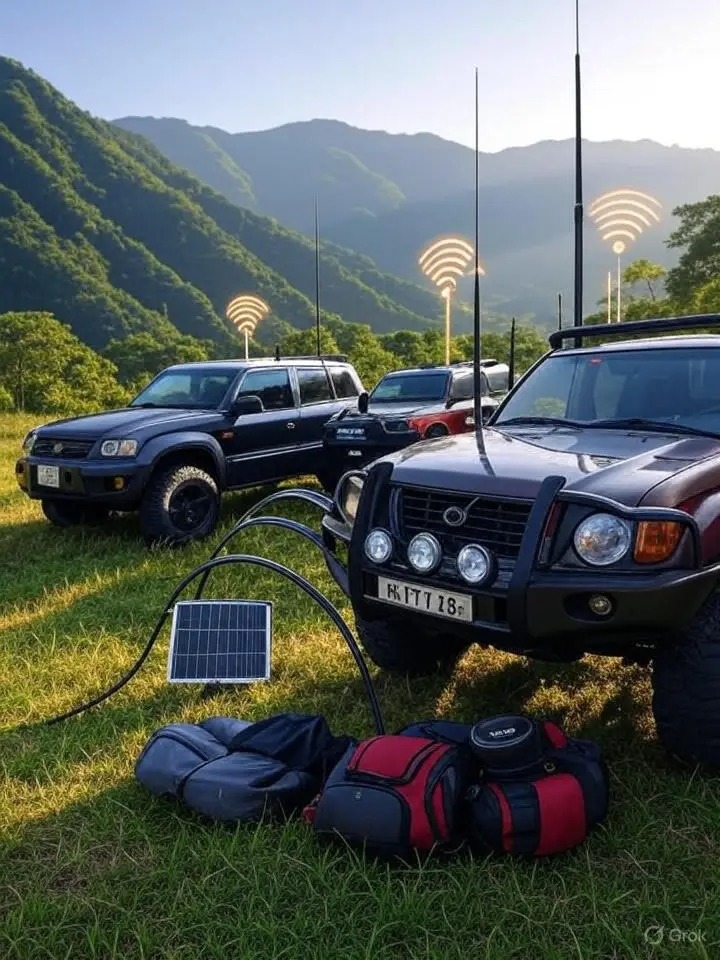
Search and rescue operations particularly benefit from REACT’s capabilities. Volunteers can establish relay stations in remote areas, extending the communication range for search teams operating beyond normal radio coverage. They maintain accountability for field teams, relay position reports, and coordinate resource deployments, all while maintaining detailed logs that support after-action analysis.
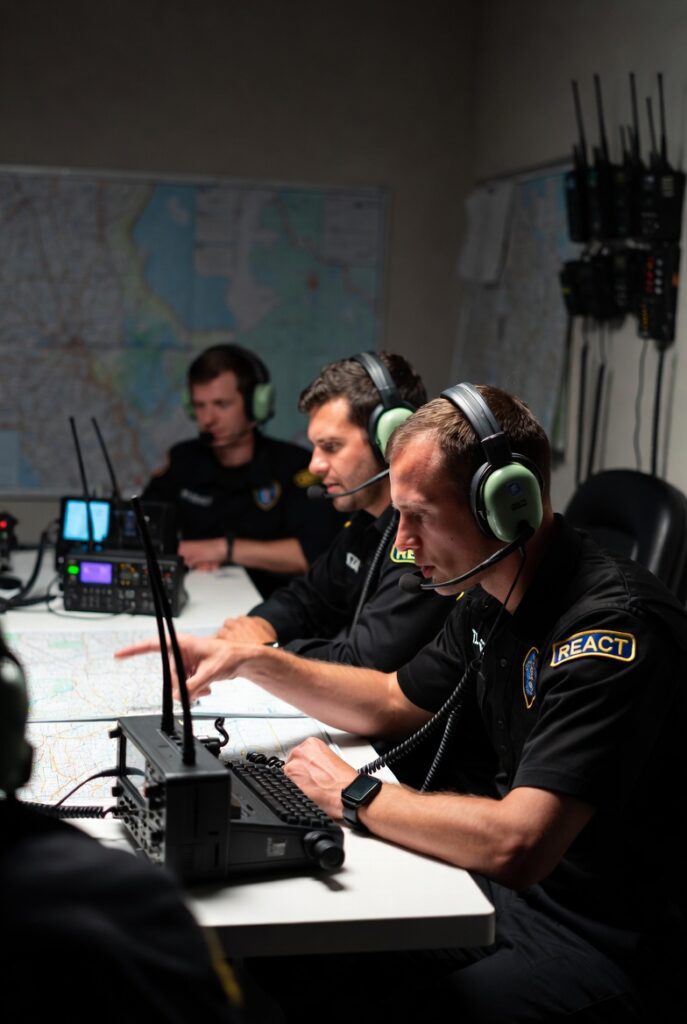
The organization also supports emergency operations centers during activations, providing additional operators when regular staff face exhaustion during extended operations. REACT volunteers can handle administrative traffic, maintain situation status boards, and operate amateur radio stations that provide backup communications when primary systems fail. This surge capacity proves invaluable during long-duration incidents that strain agency resources.
Hospital and healthcare facility support represents an emerging deployment area. When normal communications fail, REACT teams can establish emergency networks connecting hospitals with emergency management, enabling coordination of patient transfers, supply deliveries, and staffing resources. These medical networks require operators familiar with HIPAA requirements and medical communication protocols, skills increasingly emphasized in REACT training programs.
Integration with Professional Emergency Services
Successful integration with professional emergency services requires careful relationship building and clear role definition. REACT teams invest significant effort in developing these relationships before emergencies occur, participating in planning meetings, exercises, and community preparedness events. This pre-incident engagement builds trust and familiarity that proves invaluable during actual deployments.
Memorandums of Understanding (MOUs) formalize relationships between REACT teams and served agencies. These documents clearly define activation procedures, operational roles, liability considerations, and resource provisions. Well-crafted MOUs prevent confusion during deployments and ensure that volunteer efforts complement rather than complicate professional response operations.
Credentialing represents another crucial integration element. Many jurisdictions require formal credentialing for emergency volunteers, verifying training, background checks, and operational qualifications. REACT teams work with local emergency management to ensure members maintain appropriate credentials, enabling access to emergency operations centers and incident sites when activated.
Getting Involved with REACT International
Individuals interested in joining REACT can explore opportunities through the organization’s website, which maintains directories of local teams and formation resources for areas without existing teams. Prospective members don’t need extensive radio experience; teams provide training and mentorship to develop necessary skills. The critical requirements are commitment to service, willingness to train, and availability for deployments.
Emergency management agencies seeking to establish or strengthen auxiliary communications capabilities should consider partnering with REACT teams. The organization’s established training programs, operational standards, and governance structure provide a framework for developing capable volunteer communication resources without starting from scratch. Existing REACT teams can provide guidance and support for agencies exploring auxiliary communications programs.
Conclusion
REACT International exemplifies how volunteer organizations can evolve to meet changing community needs while maintaining their core service mission. From its origins monitoring CB channel 9 for stranded motorists to its current role providing interoperable emergency communications, REACT has demonstrated remarkable adaptability and persistence. As natural disasters increase in frequency and severity, and as our dependence on fragile communication infrastructure grows, organizations like REACT become increasingly vital to community resilience.
The organization’s commitment to standardized training, operational consistency, and professional integration ensures that volunteer efforts enhance rather than hinder emergency response. For communities seeking to strengthen their emergency communication capabilities, REACT International offers a proven model for organizing and deploying skilled volunteers who can make a genuine difference when disasters strike. The volunteers who dedicate their time and expertise to REACT continue a tradition of neighbor helping neighbor, using radio technology to bridge communication gaps and save lives when traditional systems fail.